AI platform teams
Use one mediation layer instead of rebuilding context-delivery logic in each application.

Product evaluation
These screens show Outer Syntax working today. Development continues as the product gives teams one governed path to curate organizational context, apply it to AI requests, validate responses, and inspect how the context performed. The views below use example workspace data so public product evidence does not expose customer information.
Operating path
Outer Syntax does not ask every application team to recreate context rules. The product centralizes approved material and its requirements, mediates relevant context into requests, checks outputs, and returns usage signals to the people responsible for improving the library.
Organize source material into a context library with accountable ownership.
Identify directive requirements and sources that need remediation before they can guide requests.
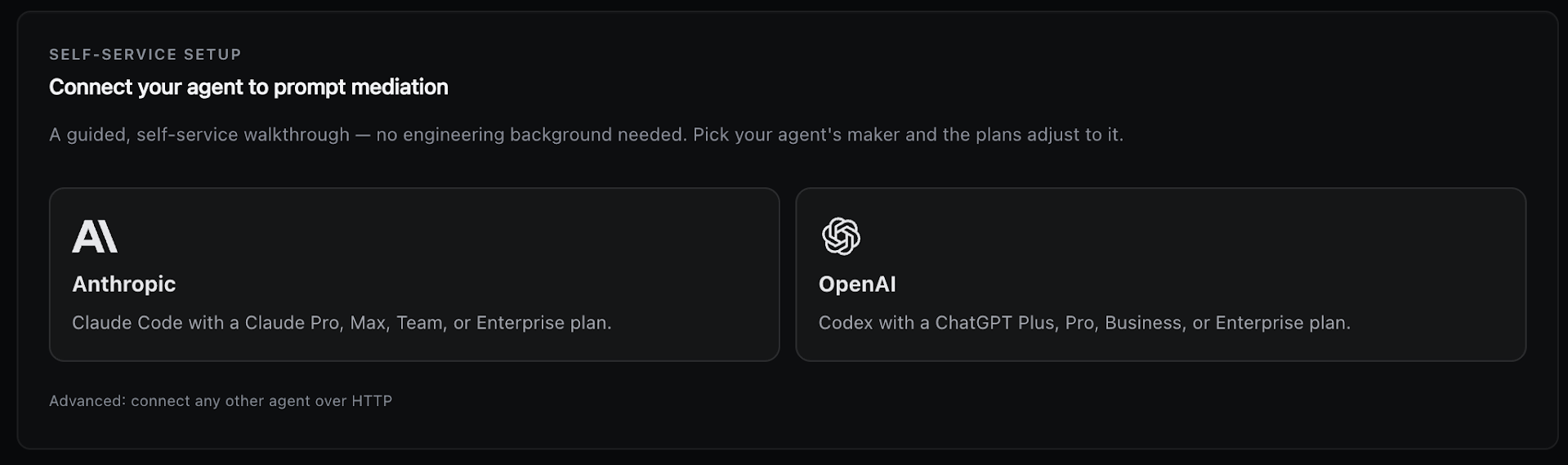
Connect Claude Code and Codex through guided setup, or use the HTTP path for another agent system.
Evaluate responses against the context and expectations applied to the request.
Review matching, validation, findings, and library coverage in one product view.
01 / Measure
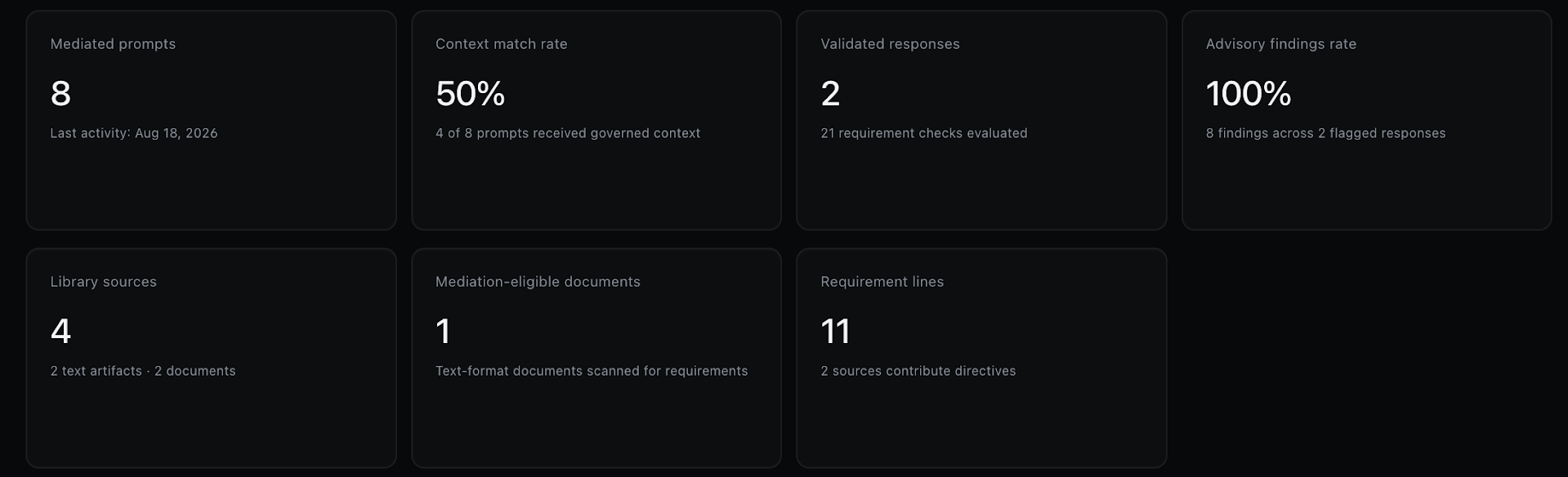
The dashboard brings mediated prompts, context matching, validated responses, advisory findings, library sources, eligible documents, and requirement lines into one workspace. An evaluator can see whether context is being used and where quality or coverage work remains instead of reconstructing those signals application by application.
02 / Improve
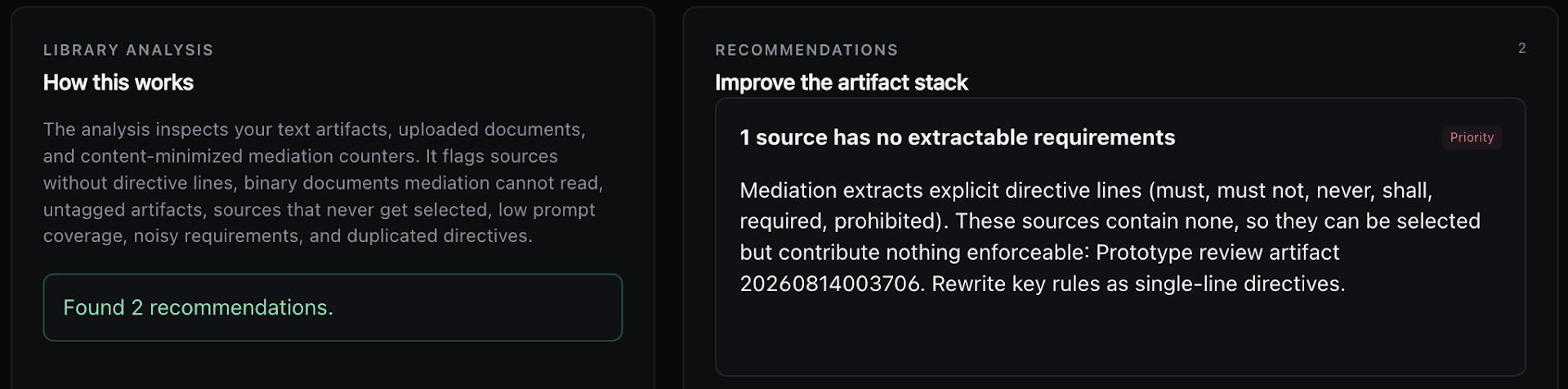
Library analysis identifies sources that do not yet contribute enforceable directive requirements and prioritizes a remediation path. This connects governance work to the material that actually reaches AI systems: context owners can see which source needs attention and why, rather than receiving a generic warning detached from the library.
03 / Connect
The product provides guided prompt-mediation setup for Claude Code and Codex, plus an HTTP option for other agent systems. The public site names only these current paths rather than implying provider-wide support. During an architecture review, the useful question is where a shared context-control point fits into the request path you already operate.
Evaluation questions
A useful evaluation starts with the context path, not a generic feature checklist. Map the sources, owners, request-time consumers, response checks, and operating signals that matter in your environment.
Current fit
Use one mediation layer instead of rebuilding context-delivery logic in each application.
Keep policy close to execution and make the context influencing responses easier to review.
See which material is eligible, where directive requirements are missing, and what needs refinement.
Boundary: Outer Syntax complements gateways, retrieval systems, knowledge platforms, and observability tools. It does not claim to replace the entire AI stack.
Architecture review
Bring the current request path, the systems involved, and the control gap you want to evaluate. Outer Syntax will use that information for a focused follow-up.